No products in the cart.
Filaments
Showing 1–30 of 341 results
- eSun, eSun ABS+
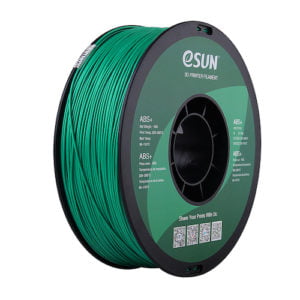
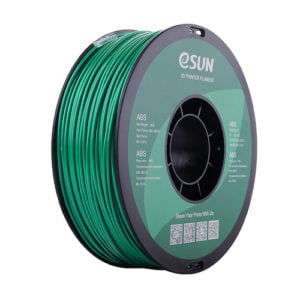
eSun ABS filament Green 1kg
It is a material with low cost and good mechanical properties; ABS has good toughness and impact resistance, which can print strong and durable parts; It has high thermal deformation temperature and can be used in some outdoor and high temperature applications.
Description
It is a material with low cost and good mechanical properties; ABS has good toughness and impact resistance, which can print strong and durable parts; It has high thermal deformation temperature and can be used in some outdoor and high temperature applications.
Sellingpoint
Low cost
Sturdy and durable
Heat resistanceHigh toughness
High impact resistance
SKU: ABS175G1 - eSun, eSun ABS+
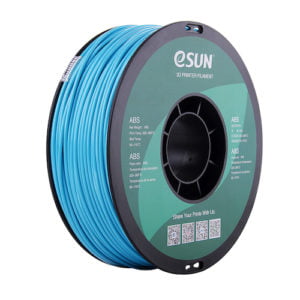
eSun ABS filament Light Blue 1kg
It is a material with low cost and good mechanical properties; ABS has good toughness and impact resistance, which can print strong and durable parts; It has high thermal deformation temperature and can be used in some outdoor and high temperature applications.
Description
It is a material with low cost and good mechanical properties; ABS has good toughness and impact resistance, which can print strong and durable parts; It has high thermal deformation temperature and can be used in some outdoor and high temperature applications.
Sellingpoint
Low cost
Sturdy and durable
Heat resistanceHigh toughness
High impact resistance
SKU: ABS175D1 - eSun, eSun ABS+
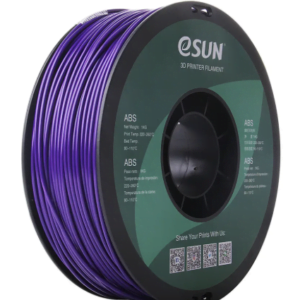
eSun ABS purple 1kg
Description
It is a material with low cost and good mechanical properties; ABS has good toughness and impact resistance, which can print strong and durable parts; It has high thermal deformation temperature and can be used in some outdoor and high temperature applications.
Sellingpoint
Low cost
Sturdy and durable
Heat resistanceHigh toughness
High impact resistance
SKU: ABS175Z1 - eSun, eSun ABS+
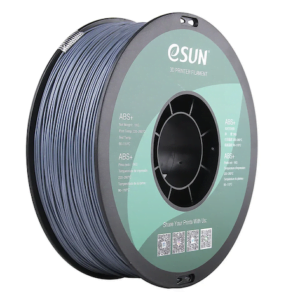
eSun ABS+ 2.85 Gray 1KG
Description
Based on the modification of ABS material, it has higher mechanical properties, lower odor and lower shrinkage rate than conventional ABS materials. With high toughness and high impact resistance, ABS+ can be used to print sturdy and durable parts; low VOC volatile content, low odor during printing, comfortable printing without pressure; low shrinkage, not easy to warp and crack during printing.
Selling point
Heat resistance
Sturdy and durable
High toughness
Low odorLow shrinkage
High impact resistance
Excellent printability
SKU: 45612-285 - eSun, eSun ABS+
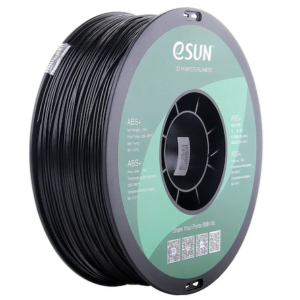
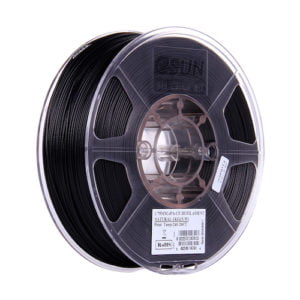
eSun ABS+ Black 1KG
Description
Based on the modification of ABS material, it has higher mechanical properties, lower odor and lower shrinkage rate than conventional ABS materials. With high toughness and high impact resistance, ABS+ can be used to print sturdy and durable parts; low VOC volatile content, low odor during printing, comfortable printing without pressure; low shrinkage, not easy to warp and crack during printing.
Selling point
Heat resistance
Sturdy and durable
High toughness
Low odorLow shrinkage
High impact resistance
Excellent printability
SKU: abs+175b1 - eSun, eSun ABS+
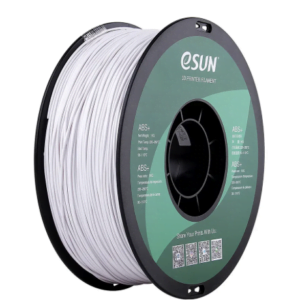
eSun ABS+ cold white 1kg
Description
Based on the modification of ABS material, it has higher mechanical properties, lower odor and lower shrinkage rate than conventional ABS materials. With high toughness and high impact resistance, ABS+ can be used to print sturdy and durable parts; low VOC volatile content, low odor during printing, comfortable printing without pressure; low shrinkage, not easy to warp and crack during printing.
Selling point
Heat resistance
Sturdy and durable
High toughness
Low odorLow shrinkage
High impact resistance
Excellent printability
SKU: ABS+175CW1 - eSun, eSun ABS+
eSun ABS+ filament 1,75 green 1kg
Description
Based on the modification of ABS material, it has higher mechanical properties, lower odor and lower shrinkage rate than conventional ABS materials. With high toughness and high impact resistance, ABS+ can be used to print sturdy and durable parts; low VOC volatile content, low odor during printing, comfortable printing without pressure; low shrinkage, not easy to warp and crack during printing.
Selling point
Heat resistance
Sturdy and durable
High toughness
Low odorLow shrinkage
High impact resistance
Excellent printability
SKU: ABS+175G1 - eSun, eSun ABS+
eSun ABS+ filament 1,75 Magenta 1kg
Description
Based on the modification of ABS material, it has higher mechanical properties, lower odor and lower shrinkage rate than conventional ABS materials. With high toughness and high impact resistance, ABS+ can be used to print sturdy and durable parts; low VOC volatile content, low odor during printing, comfortable printing without pressure; low shrinkage, not easy to warp and crack during printing.
Selling point
Heat resistance
Sturdy and durable
High toughness
Low odorLow shrinkage
High impact resistance
Excellent printability
SKU: ABS+175PP1 - eSun, eSun ABS+
eSun ABS+ filament Blue 1kg
Description
Based on the modification of ABS material, it has higher mechanical properties, lower odor and lower shrinkage rate than conventional ABS materials. With high toughness and high impact resistance, ABS+ can be used to print sturdy and durable parts; low VOC volatile content, low odor during printing, comfortable printing without pressure; low shrinkage, not easy to warp and crack during printing.
Selling point
Heat resistance
Sturdy and durable
High toughness
Low odorLow shrinkage
High impact resistance
Excellent printability
SKU: ABS+175U1 - eSun, eSun ABS+
eSun ABS+ filament Yellow 1kg
Description
Based on the modification of ABS material, it has higher mechanical properties, lower odor and lower shrinkage rate than conventional ABS materials. With high toughness and high impact resistance, ABS+ can be used to print sturdy and durable parts; low VOC volatile content, low odor during printing, comfortable printing without pressure; low shrinkage, not easy to warp and crack during printing.
Selling point
Heat resistance
Sturdy and durable
High toughness
Low odorLow shrinkage
High impact resistance
Excellent printability
SKU: ABS+175Y1 - eSun, eSun ABS+
eSun ABS+ fire engine red 1kg
Description
Based on the modification of ABS material, it has higher mechanical properties, lower odor and lower shrinkage rate than conventional ABS materials. With high toughness and high impact resistance, ABS+ can be used to print sturdy and durable parts; low VOC volatile content, low odor during printing, comfortable printing without pressure; low shrinkage, not easy to warp and crack during printing.
Selling point
Heat resistance
Sturdy and durable
High toughness
Low odorLow shrinkage
High impact resistance
Excellent printability
SKU: ABS+175FR1 - eSun, eSun ABS+
eSun ABS+ Grey 1KG
Description
Based on the modification of ABS material, it has higher mechanical properties, lower odor and lower shrinkage rate than conventional ABS materials. With high toughness and high impact resistance, ABS+ can be used to print sturdy and durable parts; low VOC volatile content, low odor during printing, comfortable printing without pressure; low shrinkage, not easy to warp and crack during printing.
Selling point
Heat resistance
Sturdy and durable
High toughness
Low odorLow shrinkage
High impact resistance
Excellent printability
SKU: abs+175h1 - eSun, eSun ABS+
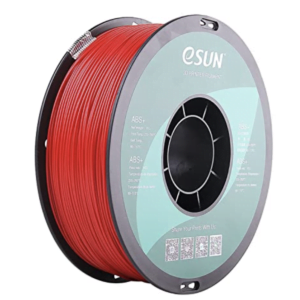
eSun ABS+ Red 1KG
Description
Based on the modification of ABS material, it has higher mechanical properties, lower odor and lower shrinkage rate than conventional ABS materials. With high toughness and high impact resistance, ABS+ can be used to print sturdy and durable parts; low VOC volatile content, low odor during printing, comfortable printing without pressure; low shrinkage, not easy to warp and crack during printing.
Selling point
Heat resistance
Sturdy and durable
High toughness
Low odorLow shrinkage
High impact resistance
Excellent printability
SKU: abs+175r1 - eSun, eSun Engineering filaments
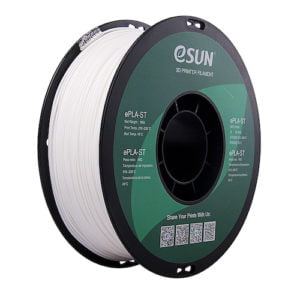
eSun ePLA-ST filament natural white 1kg
ePLA-ST
High impact resistance, high elongation at break, high bonding strength and high printing accuracy.The toughness is better than PETG, and it has good printability nad toughness of PLA, suitable for printing mechanical parts with toughness and precision requirements.
Description
High impact resistance, high elongation at break, high bonding strength and high printing accuracy.The toughness is better than PETG, and it has good printability nad toughness of PLA, suitable for printing mechanical parts with toughness and precision requirements.
Sellingpoint
High impact resistance
PETG Better Toughness than PETGExcellent printability
SKU: EPLA-ST175N1 - eSun, eSun PLA+
eSun eStars PLA Galaxy Black 1kg
eStars-PLA
The product is modified based on PLA material, in addition it has gorgeous luminous star appearance effect. PLA is an environmentally friendly material and easy to print.
Description
The product is modified based on PLA material, in addition it has gorgeous luminous star appearance effect.PLA is an environmentally friendly material and easy to print.
Sellingpoint
Gorgeous luminous star appearance effect
SKU: WSTARS-PLA175GB1